Supreme Court Turns Down Custodia Bank's Appeal Over a Federal Reserve Master Account
The Court gave no reasons. An appeals court's ruling stands: a 1980 law does not oblige the Fed to give every eligible bank the account it needs to use the Fed's payment services.
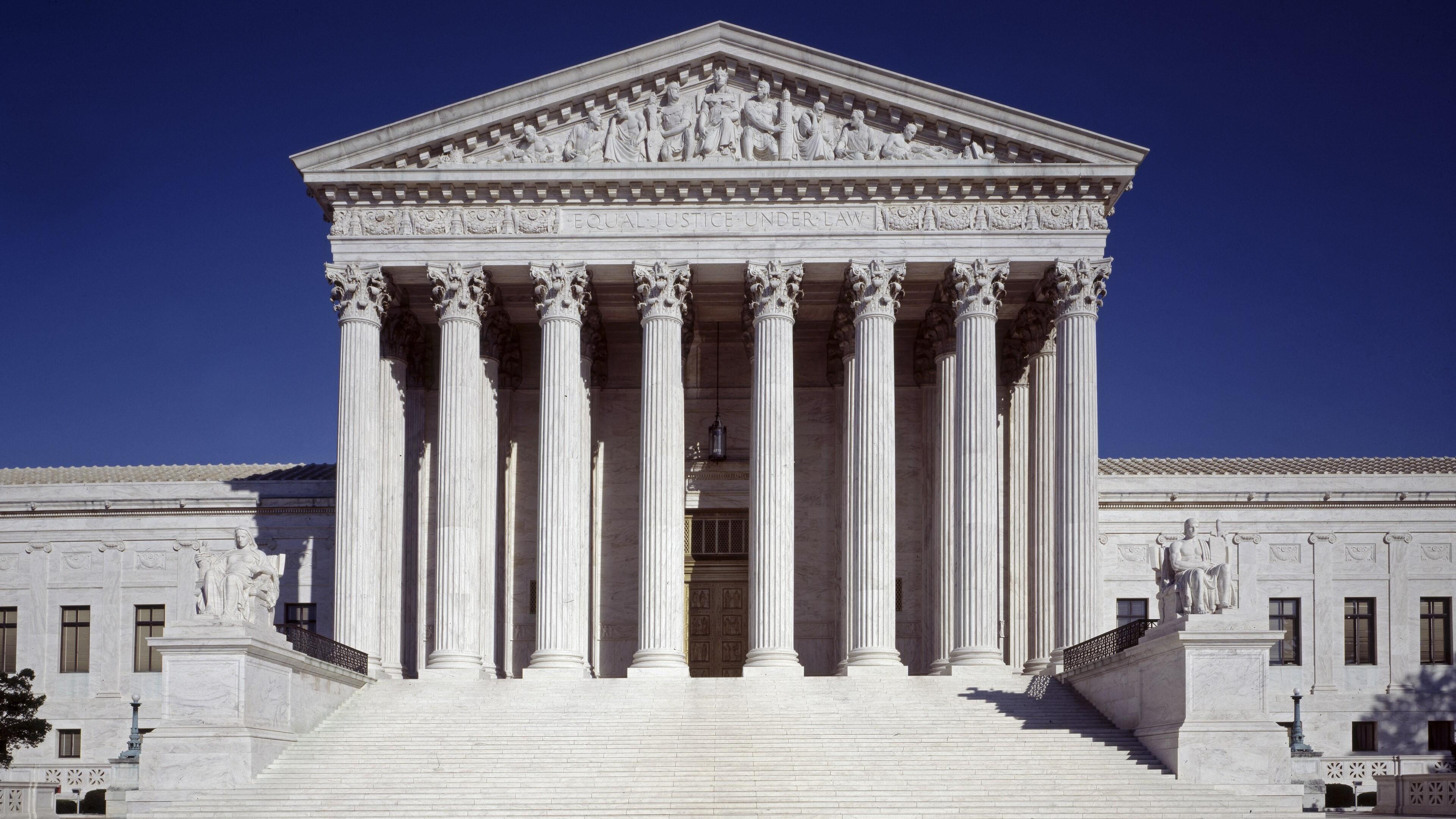
The Supreme Court on 16 November declined to hear Custodia Bank's appeal in its suit to make the Federal Reserve open a master account for it, the account a bank needs to use the Fed's payment services. The Court's order gives no reasons, and no justice is recorded as dissenting.01
The denial leaves in place the ruling Custodia lost on 31 October 2025 in the Tenth Circuit, the federal appeals court that heard the case after the district court in Wyoming. The Tenth Circuit upheld the judgment for the Federal Reserve Board of Governors and the Federal Reserve Bank of Kansas City on every claim Custodia brought.04
A master account is a bank's own account with the Federal Reserve, held at one of the twelve regional Reserve Banks, the Tenth Circuit's opinion says; without one, a bank can reach the Fed's payment systems through another bank that has one.04
Custodia holds a Wyoming charter as a Special Purpose Depository Institution, which cannot make loans, must back its customers' dollar deposits 100 percent with liquid assets and may hold digital assets in custody for customers. It is not a member of the Federal Reserve System. It applied for a master account in October 2020, and in January 2021 the Kansas City Fed confirmed that it was legally eligible and told it there were "no showstoppers". In August 2021 it also applied to become a member of the System, which would have put it under federal supervision.04
In June 2022, nineteen months after applying, Custodia sued the Kansas City Fed and the Board, saying they had failed to act on its application and were bound to grant it. Under guidelines the Board published in August 2022, a bank like Custodia, neither federally insured nor federally supervised, would "generally receive the strictest level of review".04
In January 2023 the Kansas City Fed denied the account, citing a business model "narrowly focused on crypto-asset activities" whose risks were "highly likely [to be] inconsistent with safe and sound banking practices". The Board denied membership the same day.04
The district court in Wyoming ruled against Custodia on 29 March 2024. The Tenth Circuit upheld that ruling by two votes to one, in an opinion by Judge Ebel, holding that Custodia "is not statutorily and automatically entitled to a master account" and reading the 1980 provision Custodia relied on as "a pricing principle rather than an access command". Judge Tymkovich dissented: Congress, he wrote, "mandated access for all nonmember depository institutions".04
On 13 March 2026 the Tenth Circuit declined to rehear the case with all its active judges sitting, rather than the three who had decided the appeal. Judges Hartz, Tymkovich and Eid voted to rehear it, and Judge Tymkovich dissented again, joined by Judge Eid: "Without a master account, a bank cannot operate in the modern banking system."04
Custodia's petition to the Supreme Court, filed on 10 July 2026, asked whether the Monetary Control Act of 1980, which in the petition's words states that the Federal Reserve "shall" provide its services to legally eligible banks outside the System's membership, gives the presidents of the regional Reserve Banks discretion to deny them master accounts. It called a master account "indispensable" for a bank's day-to-day operations and said the Kansas City Fed's staff, in internal memorandums, had deemed Custodia's capital "adequate" and its liquidity risk "low". It acknowledged that no two federal appeals courts had yet decided the question differently, but said the question "has engendered deep division among diverse judges who take diametrically different views of the statutory question".03
The Board's brief opposing review, filed on 13 October by Solicitor General D. John Sauer, called the Tenth Circuit's decision correct. It relies on the Federal Reserve Act of 1913, under which a Reserve Bank "may receive" deposits. In an earlier Supreme Court case, Farmers & Merchants Bank, decided in 1923, the Court held that the Act "confers authority" to receive deposits but imposes no "obligation", the brief says. It says the only other federal appeals court to address the issue, the Second Circuit, agreed that Reserve Banks hold "discretionary authority over master account access".05 Custodia's petition had described the Second Circuit's case as one about revoking an account already granted, "a discrete but related question".03
The Board's brief also says Custodia argued in the lower courts only for an "absolute right" to an account and did not challenge the Kansas City Fed's reasons for the denial, and that "only about half" of the depository institutions in the United States have master accounts. It points to a proposal the Board published for comment on 26 May 2026 for a new type of account that eligible banks could use to clear and settle payments.05
The Kansas City Fed's own brief, filed the same day, called Custodia's reading "a statutory interpretation so extreme that no court has ever adopted it" and said Custodia "never challenged the basis" for the denial.06
Custodia's reply of 28 October said that "review is warranted" even though no two appeals courts had split on the question, and that the "extreme" label "would come as a surprise to the multiple distinguished judges" who had supported its position. On the Board's reading of the 1913 Act, it quoted Judge Tymkovich: the "may receive" provision is "simply the background legal principle that gives the regional banks legal authority to accept deposits", and the 1980 Act "limits the Kansas City Fed's discretion". To the Board's point about a new type of account, it answered that the prospect of "slimmed-down master accounts" for some banks was "cold comfort".07
Three outside parties filed briefs supporting Custodia: the Blockchain Association, The Digital Chamber, and Senator Cynthia M. Lummis with former Senator Patrick J. Toomey. The docket lists none supporting the Board or the Kansas City Fed.02
A case on the same question, PayServices Bank v. Federal Reserve Bank of San Francisco, was argued in another federal appeals court, the Ninth Circuit, on 4 December 2024. Custodia's petition says that court put the case on hold shortly after argument, pending state administrative proceedings; the Board's brief lists the appeal as pending.0305