The Toll Booth at Hormuz Took Bitcoin. Washington Sanctioned the Exchange, Not the Coin.
Since June, the Treasury says, Iran’s mandatory “insurance” for ships crossing the Strait has been paid partly in bitcoin and routed through a Tehran exchange to the Revolutionary Guards. Wednesday’s designation names a street address, two websites, a developer and three men — and, across four OFAC actions against this network, not one bitcoin address. A sanction reaches what has an address. The chain does not, and the Treasury does not pretend it does.
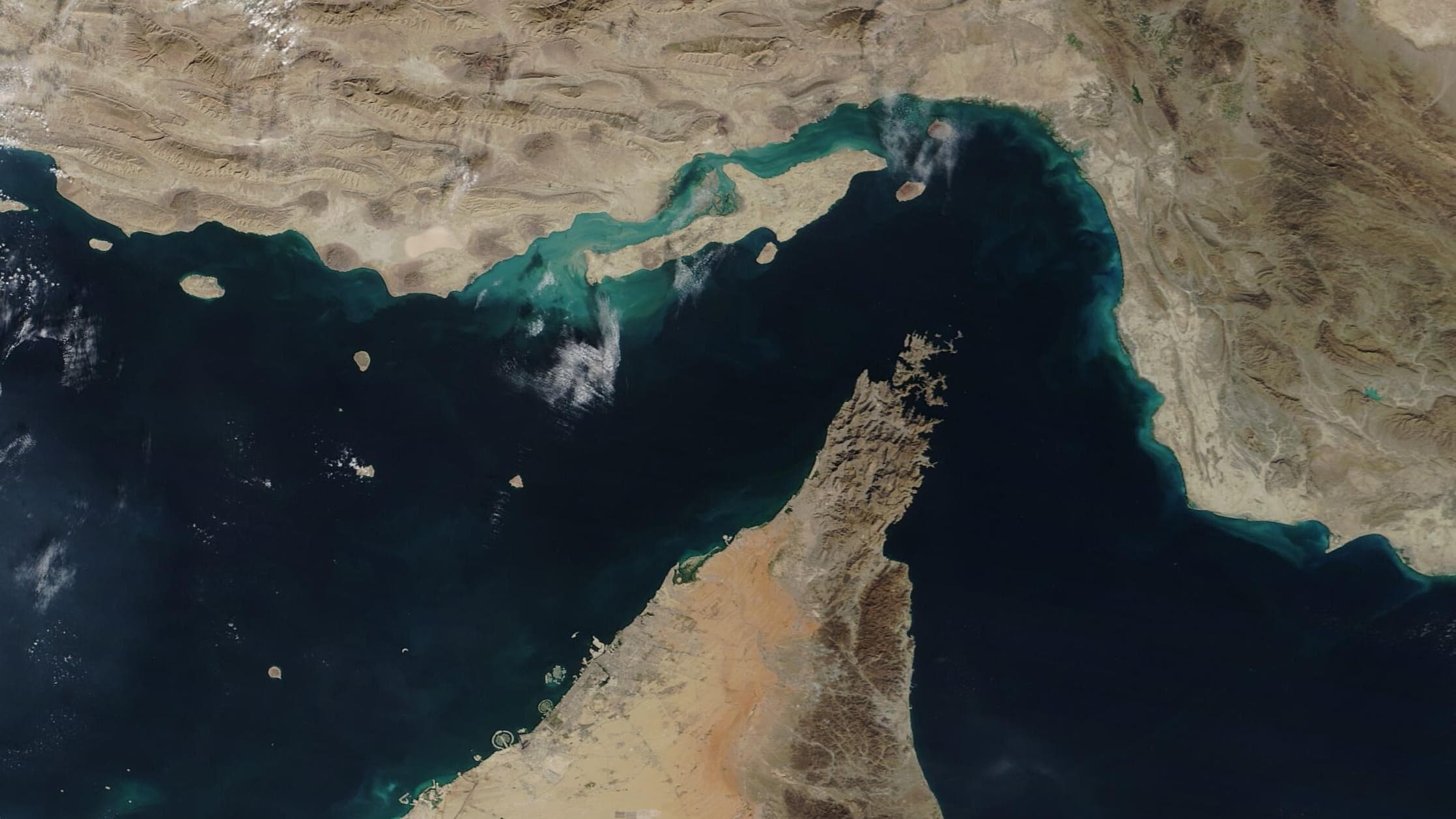
About a third of the world's seaborne oil passes through a channel twenty-one miles wide between Iran and the tip of the Musandam Peninsula. Since the summer, according to the United States Treasury, a ship wanting to cross it has been sold a policy it did not ask for, by an authority set up by Iran's Ministry of Economy, and has been able to pay in bitcoin.
That is not a claim this paper is making. It is what the Treasury said on July 29, when it designated the HormuzSafe Marine Services Authority and the Persian Gulf Marine Insurance Company for "an Islamic Revolutionary Guard Corps (IRGC)-backed extortion scheme that forces commercial vessels to purchase mandatory maritime 'insurance' to transit the Strait." HormuzSafe, in Treasury's words, "accepts payment in Bitcoin and other digital assets as part of the regime's attempts to bypass Western sanctions."03
On Wednesday it said where the money went. "Since June of this year, OFAC-designated Hormuz Safe Marine Services Authority has used BitBank to transfer payments it received to the Iranian regime." BitBank is a Tehran exchange, founded in 2024, controlled by Babak Zanjani, the financier who was sentenced to death in Iran in 2016 for embezzling from the national oil company and re-emerged in 2025 as a backer of regime projects. Between June and July, the Treasury says, Zanjani "utilized BitBank to facilitate the transfer of hundreds of millions of dollars' worth of Bitcoin to the IRGC."01
So the toll booth at the most important chokepoint in the oil trade took bitcoin, and the bitcoin went to the Revolutionary Guards through an exchange. The paper prints that plainly because it is true, and because a reader of a Bitcoin paper should not have to learn it from someone who wants it to mean something it does not.
What was designated
Here is what the Office of Foreign Assets Control added to its list on Wednesday, in the words of its own entry:
"BITBANK (a.k.a. BITBANK3), No. 2, 35th Street, Alvand Street, Argentina Square, Tehran, Iran; Website www.bitbank3.com; alt. Website www.bitbank.com; Additional Sanctions Information — Subject to Secondary Sanctions; Organization Established Date 2024; Organization Type: Financial and Insurance Activities."02
Beneath it: the exchange's software developer, Pishtaz Simorgh Electronic Trade Company, and three executives of the parent group, each with a date of birth and an Iranian national identity number.
A street address. Two domain names. A developer. Three men. Not one wallet address, on any chain. The desk counted: the page carries zero of the "Digital Currency Address" identifiers OFAC attaches to a designation when it has them.
It does attach them when it has them. On August 7 the same office designated a Georgia-based exchange called Shelbit and its operator, and its entry listed fourteen addresses — five on Bitcoin, four on Ethereum, three on Tron, one each on BNB and Solana — with the amounts the IRGC had sent through them stated to the dollar.05 That network, by Treasury's own account, handled a few million. This one, by Treasury's own account, handled hundreds of millions in bitcoin. It has been the subject of four OFAC actions this year: January 30, July 24, July 29 and September 17. The first carried seven addresses, all on Tron.06 The three since have carried none.04
The Treasury did not say why, and this paper will not guess. Two readings are consistent with the record and a reader should hold both. One: the bitcoin moved on BitBank's own books, between accounts the exchange controlled, and there is no address that is both BitBank's and the IRGC's for OFAC to publish — the coins were custodied, so the trail is a ledger in Tehran and not a chain anyone can read. Two: the addresses exist and are being held back. Either way, the public record of "hundreds of millions of dollars' worth of Bitcoin" is, so far, a sentence in a press release.
What a sanction can reach
Under OFAC's own rules BitBank was already blocked before Wednesday. An Iranian digital asset exchange "is blocked pursuant to E.O. 13599 regardless of whether it is listed" on the sanctions list, because it meets the definition of an Iranian financial institution.07 No American could lawfully touch it from the day it opened.
What the designation adds is the four words after the address: "Subject to Secondary Sanctions." That clause is aimed at people who are not American. A foreign exchange or bank that "transact[s] with these exchanges may also face sanctions," and OFAC may designate anyone who has "materially assisted, sponsored, or provided financial, material, or technological support" to a listed exchange.08 The threat to a venue in Dubai or a bank in Istanbul is not a court. It is the loss of a dollar account.
Read the two documents together and the shape of the thing is clear. A sanction is a rule about who may deal with whom. It attaches to the parties that can be named — a company at an address, a website that can be taken down, a man with a national ID number, a correspondent bank that wants to keep clearing dollars. It reaches an exchange the way it reaches a bank, because an exchange is a bank with a different word on the door: it has a building, a licence to lose, and customers whose coins it holds.
It does not attach to the chain, and the Treasury does not pretend otherwise. There is no entry on the list for Bitcoin. There cannot be. A protocol has no address on Argentina Square.
The two facts, held together
Bitcoin does not ask who you are. That is why a state cut off from the dollar system can sell passage through the Strait of Hormuz for it, and why the IRGC can receive it. A Bitcoin paper that pretended otherwise would be lying about the thing it covers. The same property is why a dissident in Tehran can hold it, and why the paper exists.
And a sanction does not need to ask the chain anything. It needs an intermediary, and Iran's toll booth needed one too — because a state that cannot touch dollars still, at the end of the day, needs to turn what it collects into something it can spend, and the place where that happens has an address. The Treasury found the address. The toll receipts, it says, ran through BitBank for three months; BitBank is now a name that no dollar bank on earth will clear for.
The paper's custody desk put a version of this on the record two days ago, from the other side: holding bitcoin through an intermediary is not owning it, because the intermediary is where the keys are and where the reach is.satoshigazette.org Wednesday's designation is the same sentence written by the other party. The IRGC, if the Treasury is right, did not hold keys. It held an account at BitBank. That is what could be sanctioned, and it was.
CoinDesk reported on Thursday that the toll ran between one and two million dollars a vessel.09 The Treasury has not published a figure and the paper cannot verify one. What the paper can verify is what it has printed: an authority that takes bitcoin for passage, an exchange that moved it, a designation that named the exchange and its people — and a public record of the bitcoin itself that, four actions in, is still empty.