Inside the Power Dispute That Unraveled Tether's Uruguay Mining Push
Tether called Uruguay a platform for sustainable Bitcoin mining. Two abandoned sites later, the project shows why renewable power is not the same as economically usable power.
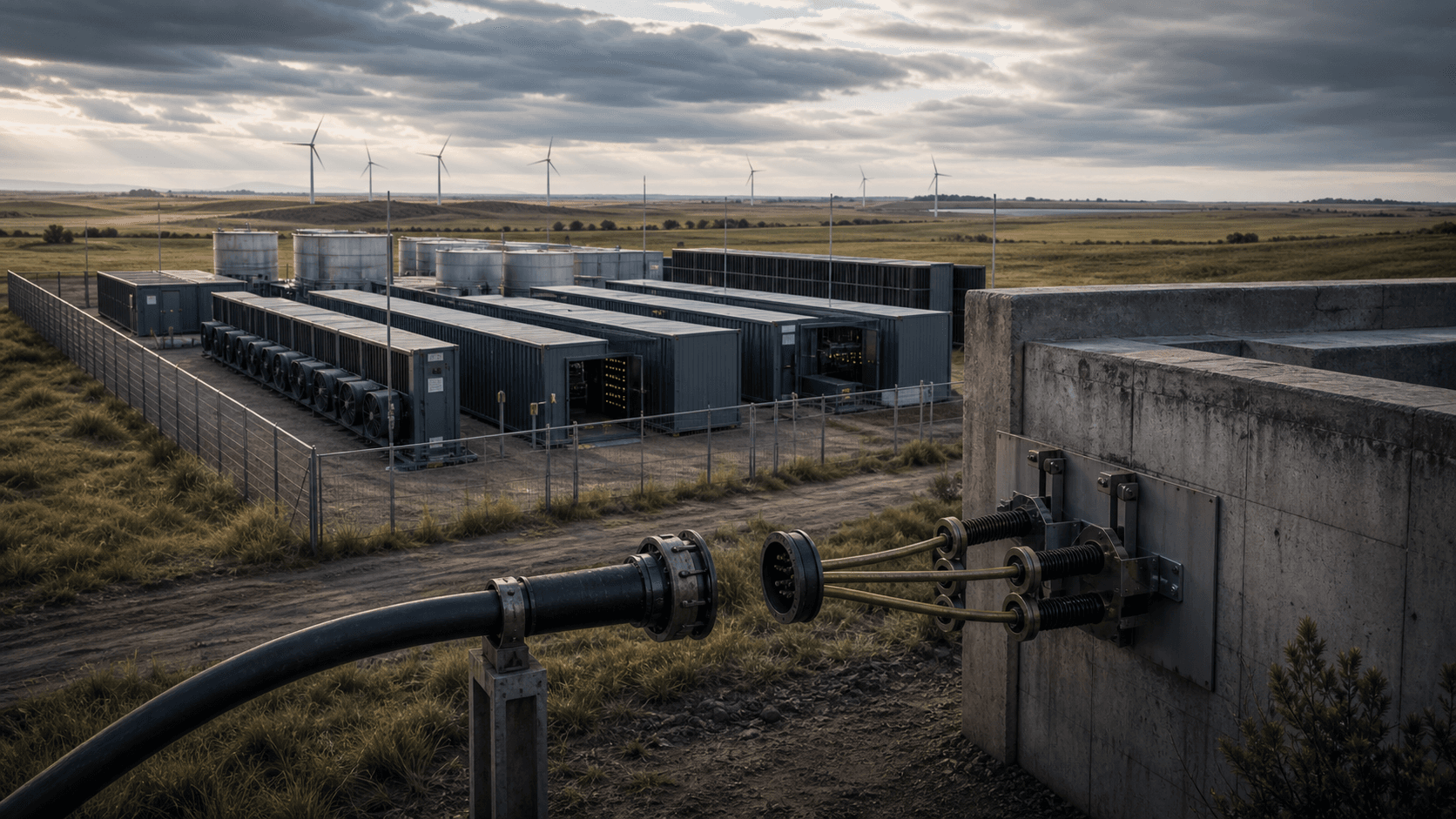
In May 2023, Tether presented Uruguay as a platform for sustainable Bitcoin mining, citing the country's renewable electricity and stable grid. The announcement said the company would invest in energy production with a local licensed partner, but it disclosed neither a budget nor the planned capacity.02
Three years later, a Reuters investigation found that the expansion had ended with two mining sites abandoned. Former contractors told Reuters that roughly $60 million had been invested in each site in Uruguay's Florida department, putting their estimate of the combined outlay near $120 million. Tether did not respond to Reuters' requests for comment, and the investment figure has not been independently confirmed by the company.01
The central failure was not a lack of renewable generation. It was a disagreement over how much electricity the operation could obtain. Reuters reported that Tether understood its contract with state utility UTE as providing a minimum allocation that could later increase, while UTE viewed the contracted amount as a ceiling. As mining demand grew, the sites could not secure the additional power Tether expected.01
The dispute moved from capacity to payment in 2025. El Observador reported that UTE cut electricity on July 25 after unpaid bills reached roughly $4.8 million before penalties. Búsqueda later reported that UTE was advancing contract termination and guarantee enforcement after two missed payments, while Tether said at the time that reports of a complete exit were inaccurate and that its local entity, Microfin, remained in negotiations.0304
Those negotiations did not rescue the project. Reuters reported that UTE approved revised contract documents but Tether representatives did not attend the signing. Tether later notified Uruguay's labor authorities that it would cease operations and dismiss most staff, according to reporting cited by Reuters. UTE told Reuters that Microfin settled its outstanding debts in December.01
The failure offers a sharper lesson than the familiar claim that Bitcoin mining follows cheap energy. Uruguay generated the renewable profile Tether wanted, but reliability and low carbon intensity did not guarantee a tariff or capacity structure that made expansion economical. After the 2024 halving reduced Bitcoin's block subsidy, every gap between expected power costs and contracted supply carried more weight. Reuters also reported that miners elsewhere have increasingly looked toward AI and high-performance computing as mining margins tightened.01
Tether's Uruguay exit does not show that renewable mining cannot work, nor does it establish the company's total loss on the project. It shows that the decisive infrastructure risk can sit in the contract rather than the generation mix. A mine can be surrounded by wind turbines and still fail at the power meter.