Bitcoin Rallied 30 Percent This Summer. Its Hashrate Went the Other Way.
Network hashrate has spent 318 days below its seven-day peak, the longest stretch since ASICs took over, and an August price recovery did not end it. SG reproduces the drought from two datasets and tests the claim that miners now have somewhere else to sell their megawatts.
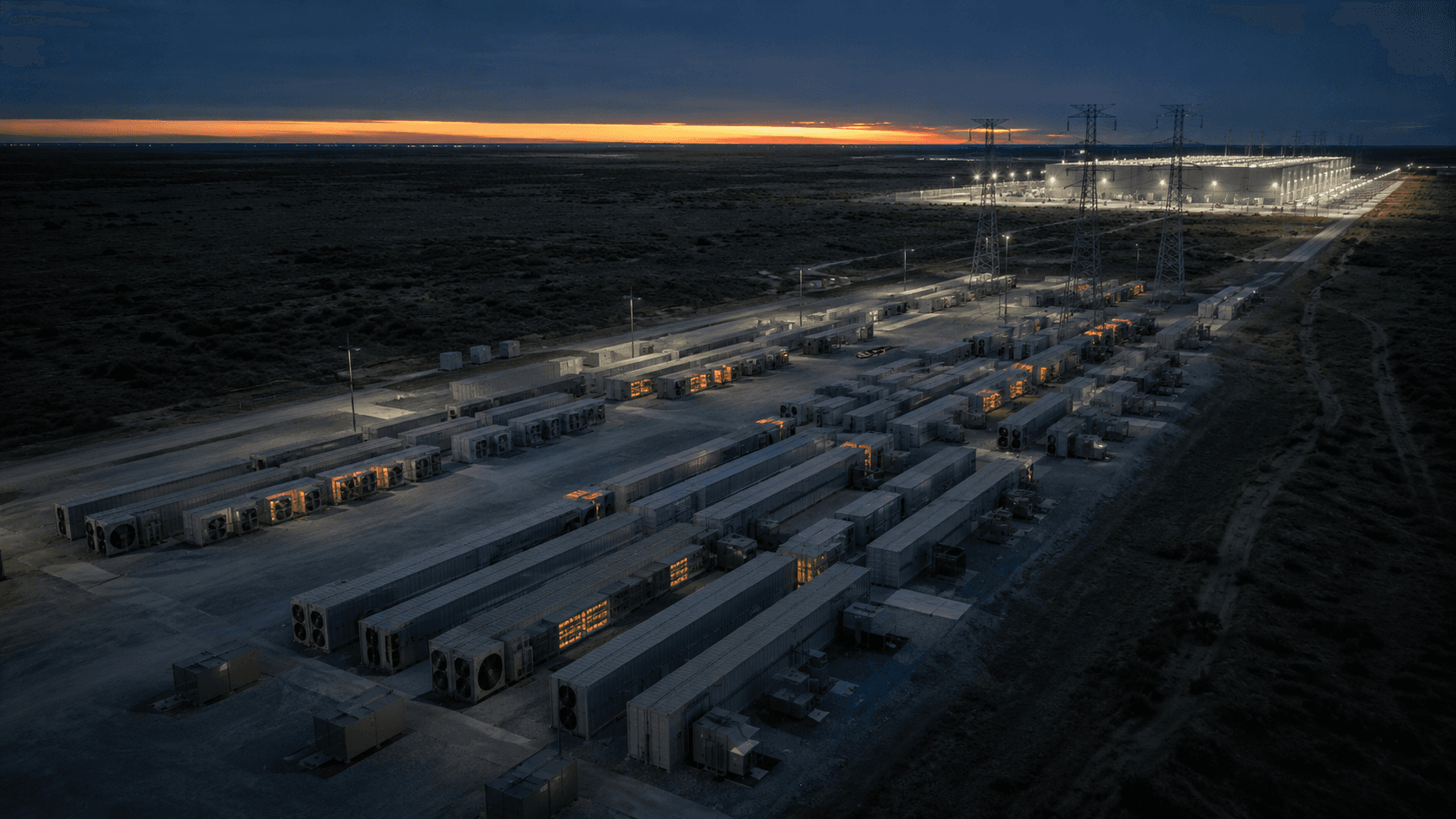
Bitcoin's network hashrate has now gone 318 days without a new seven-day high. That is the longest stretch since application-specific mining hardware took over the network. It survived a summer in which the price rose about 30 percent. And it is the one Bitcoin chart this year that a rally did not fix.
The claim that this is a "hashrate bear market" comes from an executive with a stake in the answer. Raphael Zagury, chief executive of Twenty One Capital, told the Bitcoin Asia conference in Hong Kong on August 28 that "we hit close to 1.3 zettahashes late last year, and it's been gradually, still gradually, coming down," and called it "the longest period that we've seen from an all-time high until recovery." His company filed the transcript with the SEC three days later.01
Satoshi Gazette checked the claim against the network's own record rather than the speech.
What "longest" means, and what it does not
Hashrate is not observed directly. It is estimated from how fast blocks arrive at a given difficulty, so single-day readings swing widely and the peak depends on how you smooth them. Zagury's 1.3 zettahash figure matches the highest daily estimate in mempool.space's series, 1,305.7 exahashes per second on October 25, 2025.05
On a seven-day average, the measure SG uses for every comparison below, the peak was 1,153.3 EH/s on October 19, 2025. The latest seven-day average, for September 2, is 924.9 EH/s, 19.8 percent below that peak and 318 days after it.02 Blockchain.com's independent estimate gives 1,151.6 EH/s on October 18 and 922.9 EH/s on September 1: the same 318 days and a 19.9 percent drawdown.03
SG then ran the same seven-day method across every day since January 2009 and measured each stretch between one hashrate high and the next. Four earlier stretches lasted more than 200 days: 360 days from August 2011 to July 2012, 322 days in 2009, 252 days from October 2018 to June 2019, and 209 days from May to December 2021, the China mining ban.05
So the honest ranking is this. The current drought is the longest since ASICs became the standard hardware, beating the 2018 to 2019 bear market by more than two months. It is not the longest ever: the 2011 to 2012 GPU-era slump lasted 360 days. "Longest since an all-time high" is true in the ASIC era and false before it.
Difficulty, the protocol's own two-week measurement of hashrate, tells the same story with less noise. It peaked at 155.97 trillion on October 29, 2025 and stands at 125.81 trillion after the August 23 adjustment, 19.3 percent lower. Four of the last eight adjustments were negative, including a 10 percent drop in June.07
The price came back first
What makes this stretch different from 2018 or 2021 is that the price recovered and the hashrate did not follow.
On Coinbase, bitcoin closed at $59,704 on June 25 and $77,839 on August 28, a 30.4 percent rise; August alone was up 25.2 percent close to close.06 Over the same weeks the seven-day hashrate went from 966.9 EH/s on June 25 to 867.5 on August 25, then back to 924.9 on September 2. It ended the summer 4.3 percent below where it started while the price ended 29 percent higher.02
In every earlier drought, higher prices meant higher revenue per terahash, and hashrate followed within months as machines came out of storage or off order books. This time the revenue came back and the machines did not.
Where the megawatts went
The filings of the largest public miners give the most direct explanation, and it is not that mining stopped paying. It is that the same power has a second buyer.
IREN's annual report for the year to June 30 says the company "commenced decommissioning Bitcoin mining hardware and reallocating power and data center capacity toward AI Cloud Services," aiming "to substantially complete the transition by December 31, 2026." Its installed mining capacity was about 23.2 EH/s at year-end on roughly 380 megawatts, against about 40 megawatts of operating AI capacity.09 SG reported that transition in August.Story
Hut 8's 2026 proxy statement describes "a power-first, innovation-driven approach" and lists a 15-year, 245 megawatt lease worth about $7.0 billion in base-term contract value, a partnership to develop up to 2,295 megawatts of AI capacity, and a development pipeline of 8,500 megawatts. It carved its Bitcoin mining into a separately listed company so the parent could "focus on the development of our energy infrastructure platform."08
Zagury made the same point from the other side of the table: mining "opens a set of optionality that we didn't have in the past" on AI and high-performance computing, while "hash price is still, compared to historical levels, relatively low."01
Two large operators do not make a network, and SG cannot measure how many exahashes have left for AI racks. But a marginal megawatt that used to have one buyer now has two, and the filings show which one is winning the auction.
What else could explain it
Three alternatives deserve weight. First, season: late summer is curtailment season in Texas, when miners routinely power down during grid peaks, and part of the August dip may be weather rather than strategy. Second, hardware: without a new efficiency generation shipping at scale, there is less idle capacity to switch on when prices rise. Third, the price itself: at $77,000 bitcoin is still below the levels that justified the October 2025 buildout, so some of the decline is ordinary cyclicality with a long lag.
The thesis is falsifiable either way. If the seven-day average sets a new high above 1,153 EH/s in the coming months while the price holds, the AI explanation was overstated. If the price holds and hashrate does not recover, the elasticity that defined every prior cycle has changed.
What it means for someone who just holds bitcoin
Less than the phrase "bear market" suggests. Blocks still arrive about every ten minutes because difficulty adjusts to whatever hashpower exists. A network defended by 925 EH/s is about a fifth less defended than at its own record. The cost of rewriting its history is still the cost of buying, siting and powering hundreds of exahashes of purpose-built hardware, an undertaking on the scale of the largest miners combined.
The people-first question is who owns the megawatts. When a miner reallocates power to a single AI tenant on a fifteen-year lease, a piece of Bitcoin's security budget becomes a landlord's tenant relationship. That is not an attack. It is a reminder that hashpower was always rented, and the rent just went up.
Method: seven-day rolling means of mempool.space daily average hashrate, UTC dates, cross-checked against Blockchain.com; Coinbase daily UTC closes, single venue. All snapshots were captured on September 2, 2026 and are preserved with the Story's sources.